Pulse Oximeter Readings Explained | BMC Medical
A practical step-by-step guide to pulse oximeter readings explained, including preparation, instructions, common issues, tips, and next steps.
Pulse Oximeter Readings Explained
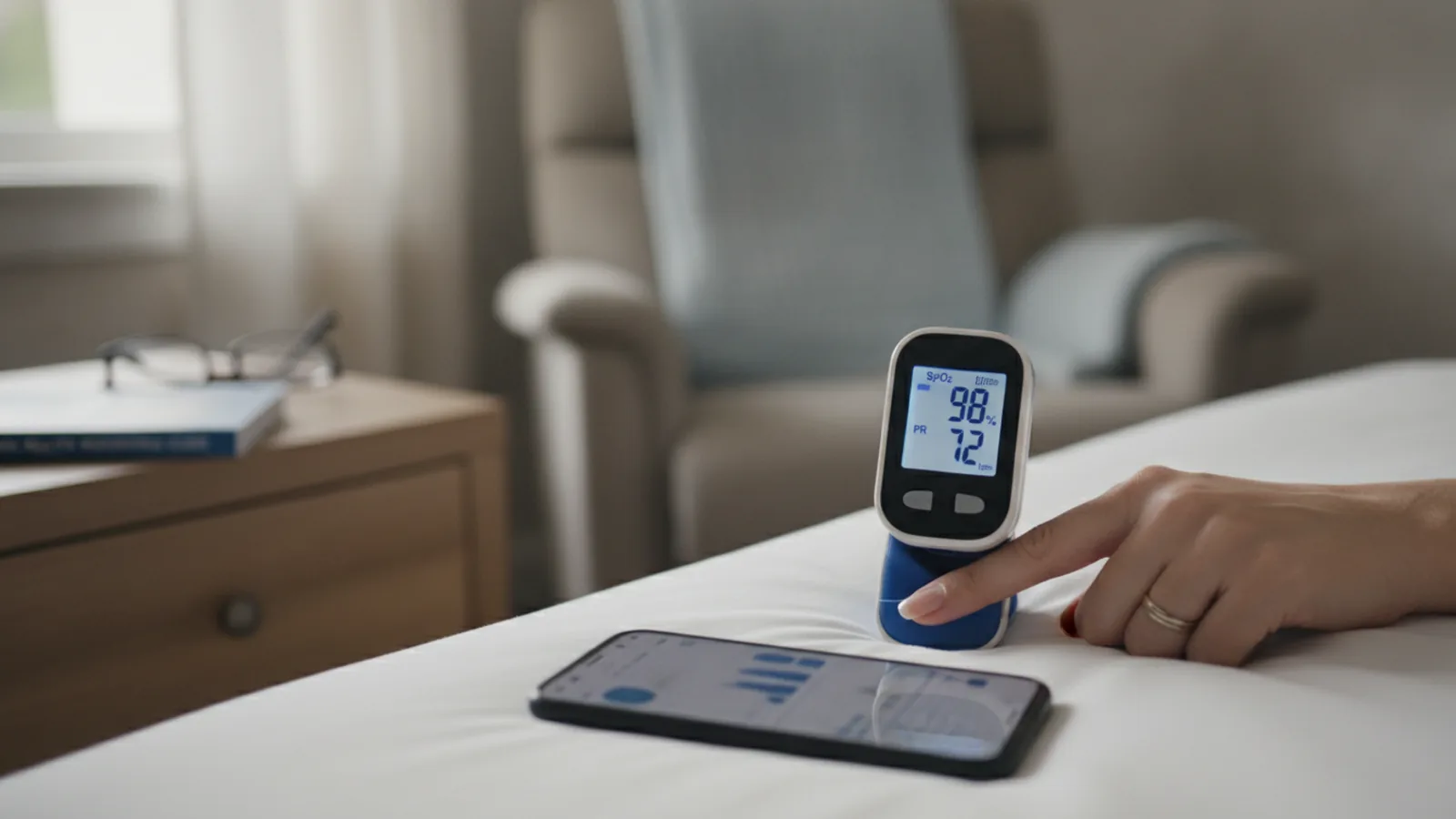
A pulse oximeter is a small, non-invasive device used to monitor the oxygen saturation in your blood. This guide explains how to take an accurate reading, what the numbers on the screen mean, and how to interpret them safely in a home setting. Understanding your pulse oximeter readings helps you track trends over time, which can be valuable information to share with your healthcare provider. This article provides a step-by-step process for getting reliable results, but is not a substitute for professional medical advice.
Fast Answer
- SpO2 Reading: A normal oxygen saturation level is typically 95% or higher for most healthy individuals.
- Pulse Rate (PR): A normal resting pulse rate is usually between 60 and 100 beats per minute (bpm).
- Primary Goal: Monitor trends over time, not single readings, and discuss any concerns with a GP or your healthcare team.
Before You Start
- A certified pulse oximeter: Ensure your device has a CE mark or UKCA mark, indicating it meets UK safety and performance standards.
- A calm state: You should be rested for at least 5 minutes before taking a measurement. Avoid caffeine or exercise beforehand.
- A way to record readings: Use a notebook and pen, or a smartphone app, to log your results systematically.
- Clean, warm hands: Readings are more accurate when your hands are at a comfortable temperature and free from dirt or lotions.
Step-by-Step Instructions
Prepare for an Accurate Reading
Your physical state can significantly impact the accuracy of a pulse oximeter reading. Before you begin, sit down in a comfortable chair and rest for at least five minutes. Ensure the room is at a moderate temperature. If your hands are cold, warm them up by rubbing them together or holding them under your arms. Cold fingers can constrict blood vessels, leading to a weak signal and an inaccurate reading.
You must also remove anything that could interfere with the oximeter's light sensor. This includes nail polish (especially dark colours like black, blue, or green), gel nails, and acrylic or artificial nails. These coatings can block the light and prevent the device from working correctly.
Position the Oximeter Correctly
Open the clip-on device. Most manufacturers recommend using the index or middle finger of your non-dominant hand (e.g., your left hand if you are right-handed). Place your finger fully inside the device so that the tip of your finger touches the internal stop. Your fingernail should be facing upwards, towards the device's screen.
Release the clip and allow it to gently close on your finger. It should feel snug but not tight or painful. If it feels uncomfortable, it may be too small or positioned incorrectly. Your hand should be resting on a flat surface, like a table or your lap, at roughly heart level.
Turn On the Device and Remain Still
Press the power button to turn on the oximeter. The screen will light up and begin the measurement process. It is crucial to remain as still as possible while the device is taking a reading. Avoid talking, gesturing, or moving your hand and arm.
The device uses beams of red and infrared light to measure your blood oxygen. Movement can disrupt this process and cause the numbers to fluctuate wildly or prevent a reading from being displayed at all. It may take anywhere from a few seconds to a minute for the numbers on the screen to stabilise. Wait until the readings for both oxygen saturation and pulse rate are steady for at least 5-10 seconds before considering them final.
Read the Oxygen Saturation (SpO2) Level
The primary number you are looking for is the oxygen saturation, usually labelled "SpO2" and displayed as a percentage (%). This number represents the percentage of oxygen-carrying haemoglobin in your blood relative to the total amount of haemoglobin.
According to NHS guidance, a normal SpO2 reading for a healthy person is typically between 95% and 100%. For individuals with long-term lung conditions like COPD, a normal baseline may be lower, often between 88% and 92%. It is essential to know what your personal normal range is, as advised by your healthcare team. A single reading slightly below 95% is not always a cause for alarm if you feel well, as it could be an error. However, a reading of 92% or less warrants a call to your GP or NHS 111 for advice.
Read the Pulse Rate (PR)
The second number displayed is your pulse rate, often labelled "PR" or accompanied by a heart symbol. This is measured in beats per minute (bpm). It measures how many times your heart beats in one minute.
For most adults, a normal resting pulse rate is between 60 and 100 bpm. This can be lower for very active people or higher if you have recently exercised, consumed caffeine, or are feeling anxious. Your pulse rate provides context for your SpO2 reading but is a separate measurement of your cardiovascular health. Note this number down alongside your SpO2 level.
Understand the Perfusion Index (PI)
Some more advanced pulse oximeters may also display a Perfusion Index, or "PI", value, also shown as a percentage. The PI is a numerical value that corresponds to the strength of the blood flow (or pulse strength) in your finger. It is not a direct measure of your health but rather an indicator of how reliable the SpO2 reading is.
A PI value typically ranges from 0.02% (very weak pulse) to 20% (very strong pulse). A higher PI suggests a stronger signal and a more reliable SpO2 measurement. If your PI is very low (e.g., below 0.4%), the oximeter may struggle to get an accurate reading. This can be caused by cold fingers, poor circulation, or incorrect device placement. Trying a different finger or warming your hands can often improve the PI.
Record Your Readings in a Log
Consistency is key to effective home monitoring. Immediately after taking a reading, record the results in a logbook or a dedicated app. Your log should include several key pieces of information for each entry:
- Date and Time: To track changes over the course of a day or week.
- SpO2 (%): The oxygen saturation reading.
- Pulse Rate (bpm): The pulse rate reading.
- Notes: Briefly describe how you are feeling (e.g., "short of breath," "feeling well," "after a short walk") and which finger was used.
This detailed record helps you and your healthcare provider identify patterns, understand your baseline levels, and see how your body responds to different activities or times of day.
Focus on the Trend, Not a Single Reading
A single, isolated pulse oximeter reading provides only a snapshot in time. It can be affected by many temporary factors. The true value of home monitoring lies in observing the trend over hours and days. A one-off reading of 94% might be a measurement error, especially if you feel fine and a repeat measurement is higher.
However, if your readings are consistently trending downwards—for example, starting at 97% in the morning and gradually falling to 93% by the evening—this is a pattern that should be discussed with a healthcare professional. Provide them with your detailed log, which gives a much clearer picture of your condition than a single number.
Quick Reference
| Reading / Situation | What It May Mean | Recommended Action |
|---|---|---|
| SpO2 95%-100% | Normal oxygen saturation for a healthy individual. | Continue monitoring as advised by your healthcare team. |
| SpO2 93%-94% | Slightly low. Could be an inaccurate reading or an early sign of a problem. | Remain calm. Re-check the reading after 5 minutes of rest, ensuring correct technique. If it remains low, contact your GP or NHS 111 for advice. |
| SpO2 92% or less | Low oxygen level (hypoxaemia). This is a cause for concern. | Contact your GP, NHS 111, or seek urgent medical advice immediately. If you have severe symptoms like confusion or difficulty breathing, call 999. |
| No reading or "--" | The device cannot get a reliable signal. | Check batteries. Warm your hands, remove nail polish, try a different finger, and remain completely still. |
| Consistently falling readings | A downward trend over hours or days is more significant than a single low reading. | Contact your GP or healthcare team and share your log of readings. |
Common Problems When Taking Readings
Even with careful technique, you may encounter issues. Here are some common problems and how to solve them.
- Inaccurate or Fluctuating Readings: The most common cause is movement. Ensure you are completely still during the measurement. Other causes include poor circulation or an irregular heartbeat (arrhythmia), which can confuse the device.
- Low Readings Due to Cold Hands: Cold fingers mean less blood flow, which leads to a weak signal. Solution: Warm your hands thoroughly by rubbing them together, running them under warm water, or using a hand warmer before retaking the measurement.
- Interference from Nail Polish: Dark or metallic nail polish, as well as acrylic and gel nails, can absorb the light from the oximeter's sensor. Solution: Remove all nail coverings from the finger being used for the reading. If this is not possible, some people have success turning the oximeter sideways on the finger, but this is less reliable.
- Poor Device Placement: If the oximeter is not placed correctly, it won't work. Solution: Make sure your finger is inserted all the way to the end and that the device is snug. Check that your nail is facing up towards the screen.
- Bright Ambient Light: Strong overhead lighting, especially from fluorescent sources or direct sunlight, can sometimes interfere with the oximeter's light sensors. Solution: Shield the oximeter with your other hand or move to a less brightly lit area.
- Low Batteries: A device with weak batteries can produce unreliable results or fail to power on. Solution: Replace the batteries as soon as the low-battery indicator appears.
Advanced Tips for Pulse Oximeter Readings
Once you are comfortable with the basics, these tips can help you get more meaningful data.
- Establish a Baseline: When you are healthy, take readings for a few days at the same time each day (e.g., morning and evening) to understand your personal "normal" range. This makes it easier to spot deviations if you become unwell.
- Check During Different States: If cleared by your doctor, you can check your readings at rest, after sitting up, and after a short walk around the room. A significant drop in SpO2 after light exertion (e.g., more than 3-4%) is something to discuss with your healthcare provider. Do not perform exertion tests if you feel very unwell or have been told not to.
- Understand Your Condition: If you have a chronic respiratory condition like COPD or a cardiovascular condition, your target SpO2 range may be different. Always follow the specific parameters given to you by your specialist or GP.
- Use the Same Finger: For maximum consistency when tracking trends, try to use the same finger for every reading. The middle or index finger of the non-dominant hand is often preferred due to typically good blood flow.
Pulse Oximeter Readings Explained FAQ
What is a normal pulse oximeter reading?
For most healthy adults, a normal SpO2 reading is 95% to 100%. A normal resting pulse rate is typically between 60 and 100 beats per minute. These ranges can vary based on your age, fitness level, and any underlying health conditions. Always ask your doctor what range is normal for you.
What does SpO2 mean on an oximeter?
SpO2 stands for peripheral capillary oxygen saturation. It is an estimate of the amount of oxygen in your blood. It is expressed as a percentage, representing how much of your blood's haemoglobin is carrying oxygen.
Can a pulse oximeter be wrong?
Yes, pulse oximeters can provide inaccurate readings. Common causes of error include cold hands, movement during the reading, dark nail polish, poor circulation, incorrect device placement, and low batteries. It's also important to note that studies have shown they can sometimes be less accurate on people with darker skin tones, occasionally overestimating oxygen levels. This is why tracking trends and noting how you feel is so important.
Which finger is best for a pulse oximeter?
The middle finger and index finger are generally considered the best for obtaining an accurate reading, as they often have strong blood flow. Using your non-dominant hand is also recommended as it is less likely to have calluses or thicker skin that could interfere with the sensor.
Does a low reading mean I have a specific illness like COVID-19?
No. A low oxygen level (hypoxaemia) is a symptom, not a diagnosis. It can be caused by many different respiratory and circulatory conditions, including pneumonia, COPD, asthma, and severe infections like COVID-19. A pulse oximeter cannot tell you what is causing the low reading. It is simply a tool to alert you that there may be a problem that requires medical attention.
Final Checklist for Pulse Oximeter Readings
- Rest First: Sit calmly for at least 5 minutes before taking a measurement.
- Prepare Your Hand: Ensure your hands are warm and clean. Remove any nail polish or artificial nails from the finger you will use.
- Position Correctly: Place the oximeter on your index or middle finger, ensuring it is snug but not tight.
- Stay Still: Keep your hand and body still while the device takes its reading.
- Wait for Stable Numbers: Wait until the SpO2 and pulse rate numbers have been stable for at least 5-10 seconds.
- Record Everything: Log the date, time, SpO2, pulse rate, and any relevant notes about how you are feeling.
- Focus on the Trend: Pay more attention to consistent changes over time than to a single reading.
- Know When to Seek Help: Do not hesitate to contact a healthcare professional if you are concerned about your readings, your symptoms, or if your SpO2 is consistently 92% or lower. This guide is for educational purposes only.