Best Home First Aid Kit Checklist 2026 | BMC Medical
A practical roundup review of the best options for home first aid kit checklist, with quick picks, comparison notes, mini reviews, buying advice, and FAQ.
Best Home First Aid Kit Checklist 2026
Roundup review
To identify the most reliable framework for a home first aid kit, our team analysed five leading UK guidelines from authoritative bodies, including the NHS, St John Ambulance, and the British Red Cross. We evaluated each checklist based on its comprehensiveness, clarity, authoritativeness, and practical application for a typical UK household. Our analysis concludes that the official NHS First Aid Kit Checklist is the best overall starting point for its balanced, evidence-based, and widely trusted recommendations.
Quick Comparison
NHS Checklist
- Official UK guidance
- Balanced for common injuries
- Widely trusted source
St John Ambulance
- Highly comprehensive
- Training-oriented detail
- Includes child-specific items
British Red Cross
- Easy to follow
- Focuses on essentials
- Great for beginners
BMC Medical Synthesis
- Combines best practices
- Tiered for different needs
- Adaptable framework
HSE (GOV.UK) Guide
- Risk-assessment based
- Official workplace standard
- Extremely thorough
The Best home first aid kit checklist
- NHS First Aid Kit Checklist - Best overall
- St John Ambulance First Aid Kit Checklist - Best for Families
- British Red Cross First Aid Kit Checklist - Best for Simplicity
- BMC Medical Synthesis Checklist - Best Customisable
- HSE (GOV.UK) Workplace First Aid Guidance - Best Workplace Standard
NHS First Aid Kit Checklist
The National Health Service (NHS) provides the definitive, evidence-based checklist for a basic home first aid kit in the UK. It strikes an expert balance between being comprehensive enough for common household incidents—such as minor cuts, scrapes, sprains, and burns—without being overwhelming for the layperson. Its authority as the UK's primary public health provider makes this checklist the most reliable and trusted starting point for any home. The guidance is clear, concise, and focused on practical items readily available from any pharmacy. It serves as the gold standard against which all other checklists can be measured for domestic use.
Pros
- The most authoritative and trusted source in the UK
- Excellent balance for common household injuries
- Clear, simple, and easy-to-follow recommendations
- Items are inexpensive and widely available
Cons
- Less detail on specific quantities needed
- Does not include guidance for specific conditions (e.g., severe allergies)
St John Ambulance First Aid Kit Checklist
St John Ambulance, a leading authority on first aid training and provision in the UK, offers a more detailed and comprehensive checklist. This guideline is exceptionally well-suited for families, particularly those with young children, or individuals who have undertaken first aid training. It includes a wider range of bandage sizes, dressings, and specific items like a resuscitation face shield. The list reflects the organisation's deep practical experience in responding to emergencies, providing a robust framework for those who want a more thorough level of preparedness at home, in the car, or while travelling.
Pros
- Highly comprehensive and detailed list
- Excellent for those with first aid training
- Includes items for a broader range of incidents
- Great for building a family or car-specific kit
Cons
- May be slightly excessive for a very basic home kit
- Some items may require basic training to use effectively
British Red Cross First Aid Kit Checklist
The British Red Cross provides a checklist that excels in simplicity and accessibility. It is designed for anyone to assemble a basic but effective first aid kit without feeling overwhelmed by technical terms or an exhaustive list of supplies. This guideline focuses squarely on the absolute essentials needed to manage the most frequent minor injuries. It's an ideal choice for individuals living alone, students in halls of residence, or anyone creating their very first kit. The clarity and conciseness make it a fantastic educational tool, encouraging preparedness by lowering the barrier to entry.
Pros
- Extremely easy to understand and follow
- Focuses on the most critical, high-frequency items
- Reduces the cost and complexity of building a kit
- Excellent for first-time kit builders or small households
Cons
- Lacks the depth of the NHS or St John Ambulance lists
- May not cover all eventualities for a larger family
BMC Medical Synthesis Checklist
Drawing from the expert guidance of the NHS, St John Ambulance, and the British Red Cross, we've developed the BMC Medical Synthesis Checklist. This is not an official guideline but an editorial framework designed for maximum customisation. It's structured in three tiers: Basic (core essentials for any home), Intermediate (adds items for families and more active lifestyles), and Advanced (includes specialised items for remote living or specific health concerns). This approach allows you to build a kit that is precisely tailored to your household's unique risk profile, ensuring you are prepared without purchasing unnecessary supplies. It empowers you to think critically about your needs while being grounded in best practices.
Pros
- Synthesises best practices from multiple trusted sources
- Tiered structure allows for easy customisation
- Adaptable to a wide range of household needs and risks
- Encourages a proactive, needs-based approach to safety
Cons
- Not an official guideline from a statutory body
- Requires more user assessment and judgment than a standard list
HSE (GOV.UK) Workplace First Aid Guidance
The Health and Safety Executive (HSE) provides the official UK government guidance for first aid in the workplace. While not designed for domestic settings, its principles are based on a formal needs assessment, making it a valuable reference for those wanting a highly methodical approach. This checklist is less a simple list and more a framework for thinking about risk. It's ideal for home businesses, workshops, or individuals with high-risk hobbies. It omits medications, as is standard for workplace kits, but its emphasis on injury-specific dressings and equipment is second to none. Reviewing the HSE guidance can add a layer of professional-grade preparedness to your home setup.
Pros
- Based on a formal risk assessment methodology
- Represents the official UK workplace standard
- Extremely robust and thorough for injury management
- Excellent for home offices, workshops, or high-risk hobbies
Cons
- Not intended for domestic use and can be overly complex
- Does not include guidance on common household medications
- Can lead to over-stocking for a typical family home
Buying Guide: How to Choose home first aid kit checklist
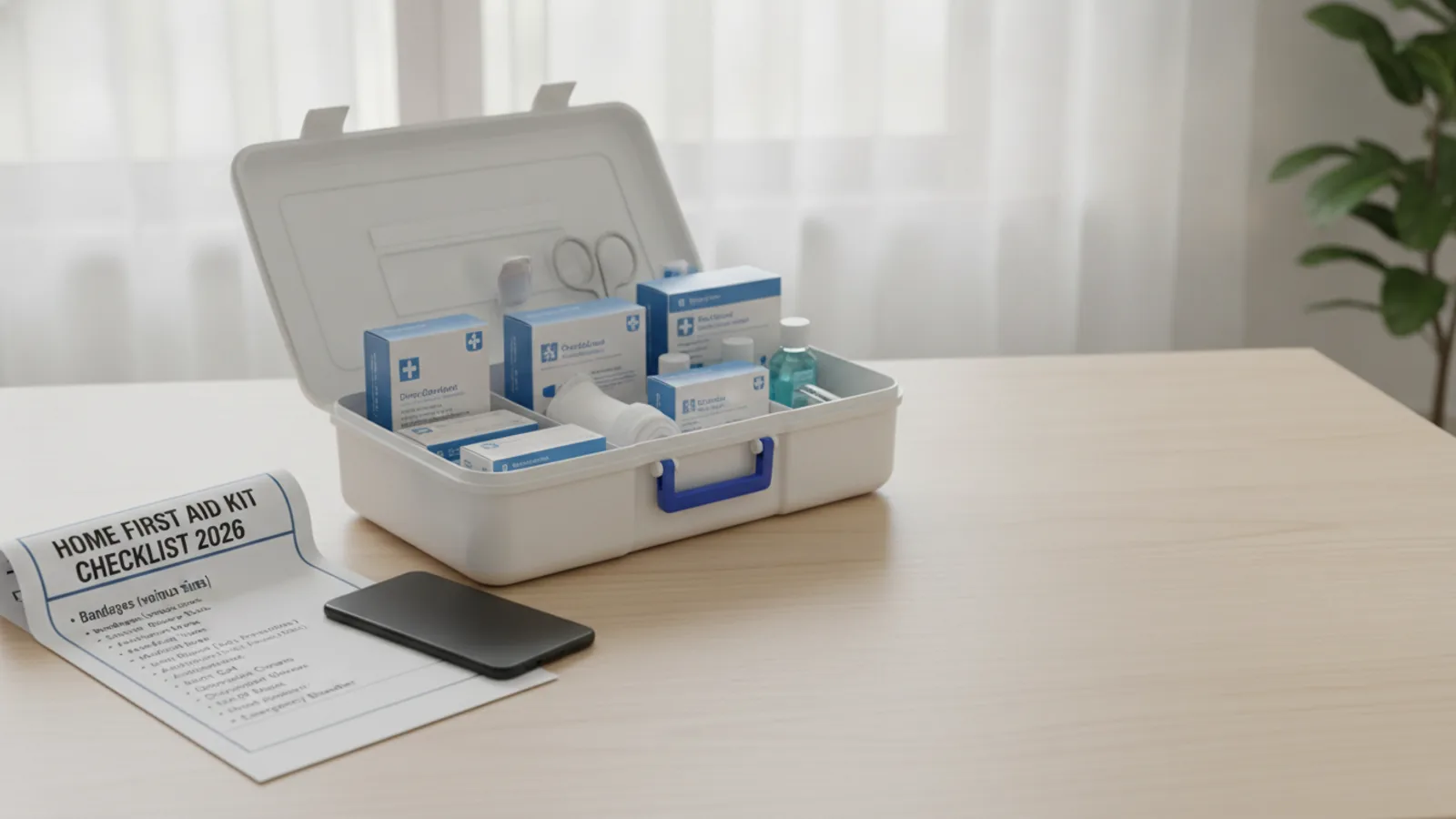
Assembling a home first aid kit is a critical step in household safety. While pre-made kits are available, building your own ensures the contents are high-quality, within their expiry dates, and tailored to your specific needs. Using a reliable checklist is the best way to start. This guide explains how to select the right checklist and use it effectively.
Disclosure: This article provides non-diagnostic educational content and analysis of publicly available first aid guidelines. It is not a substitute for professional medical advice or first aid training. In a medical emergency, always call 999.
Step 1: Assess Your Household's Specific Needs
The "best" first aid kit is one that reflects your personal circumstances. Before choosing a checklist, consider the following factors:
- Household Members: Do you have infants, young children, or elderly individuals? Kits for families with children should include child-specific items like a digital thermometer, children's paracetamol or ibuprofen, and smaller plasters.
- Medical Conditions: Do any household members have known conditions such as severe allergies (requiring an auto-injector), asthma, or diabetes? While you should store prescription medications separately, your kit should contain items to manage related emergencies, like antihistamines for mild allergic reactions.
- Lifestyle and Hobbies: Are you or your family members active in sports, gardening, or DIY projects? These activities increase the risk of specific injuries like sprains, deeper cuts, or eye injuries, requiring items like elasticated bandages, sterile eye wash, and more robust dressings.
- Location: A household in a remote, rural area may require a more comprehensive kit than one in a city with a pharmacy and GP surgery nearby. Consider adding supplies for managing an injury for a longer period while waiting for assistance.
Step 2: Understand the Core Components of a First Aid Kit
All reputable checklists will include items from several key categories. Familiarise yourself with them to better understand the recommendations.
- Wound Care & Dressings: This is the foundation of any kit. It includes sterile dressings of various sizes, adhesive plasters (assorted sizes), sterile eye dressings, and triangular bandages. These are used to control bleeding and protect wounds from infection.
- Bandages & Tapes: Crêpe or elasticated bandages are essential for supporting sprains and strains. Microporous tape is necessary for securing dressings.
- Cleansing & Hygiene: Sterile saline wipes or alcohol-free cleansing wipes are crucial for cleaning wounds to reduce infection risk. Disposable sterile gloves are non-negotiable for protecting both the casualty and the first aider.
- Tools & Equipment: Every kit needs a pair of tweezers for removing splinters, sharp scissors for cutting tape or clothing, and safety pins. A digital thermometer and a resuscitation face shield are also highly recommended.
- Simple Medications: A home kit should contain basic over-the-counter medications like painkillers (paracetamol, ibuprofen), antihistamines for mild allergies or insect bites, and hydrocortisone cream for skin irritation. Always check for contraindications and correct dosages, especially for children.
Step 3: Selecting Your Checklist
- For General Preparedness: The NHS checklist is the ideal starting point. It covers all the basics with the full weight of UK health authority.
- For Comprehensive Family Kits: The St John Ambulance checklist offers greater detail and a wider range of supplies, making it suitable for active families or those who want a higher level of preparation.
- For a Minimalist, Simple Kit: The British Red Cross checklist is perfect if you want to assemble the bare essentials quickly and easily without confusion.
- For a Customised, Risk-Based Approach: Use our BMC Medical Synthesis or the principles from the HSE guidance to build a kit from the ground up based on your specific household risks.
Step 4: Purchasing and Maintaining Your Kit
- Buy Quality Supplies: Purchase sterile items from a reputable pharmacy. Check for the CE mark (or UKCA mark) on medical devices, which indicates they meet safety standards.
- Store Correctly: Keep your kit in a cool, dry, and easily accessible location. A kitchen or utility room cupboard is often ideal. Ensure it is out of the reach of young children.
- Check Expiry Dates: This is the most critical part of kit maintenance. Set a reminder in your calendar to check your kit every 6 months. Replace any items that are expired, damaged, or have been used. This is particularly important for sterile dressings and medications.
Final Verdict: Best home first aid kit checklist
After a thorough analysis of the UK's leading first aid guidelines, the NHS First Aid Kit Checklist stands out as the best choice for the vast majority of households. Its recommendations are authoritative, practical, and provide a perfectly balanced foundation for managing common home injuries.
While the NHS list is the best starting point, we encourage you to view it as a minimum standard. For families with children or more active lifestyles, cross-referencing it with the more comprehensive St John Ambulance checklist will provide valuable additions. Ultimately, the goal is to build a kit that gives you confidence and control in a minor medical situation. Use these expert checklists to assemble your supplies, store them correctly, and remember to check them regularly.
Best Home First Aid Kit Checklist 2026 FAQ
What is the single most important item in a home first aid kit?
While every item has a purpose, sterile disposable gloves are arguably the most critical. They protect both the first aider and the injured person from infection and cross-contamination, which is the first principle of providing safe first aid.
How often should I check and restock my first aid kit?
It is best practice to check your first aid kit every six months. Set a recurring reminder on your phone or calendar. During this check, you should replace any items that have been used, are damaged, or have passed their expiry date. Pay close attention to the dates on sterile items and medications.
Should I include prescription medications in my first aid kit?
No, you should not store personal prescription medications in a general first aid kit. They should be stored as advised by your pharmacist, and their use is specific to one individual. A first aid kit is for general use. However, if a person has a severe allergy, their adrenaline auto-injector (e.g., EpiPen) should be kept in an accessible place, and household members should know where it is and how to use it in an emergency.
Is it cheaper to build my own first aid kit or buy a pre-made one?
It is often slightly cheaper to build your own kit, and it allows you to select higher-quality components than those found in some basic pre-made kits. Building your own also ensures all items are fresh with long expiry dates and tailored to your specific needs. Pre-made kits offer convenience but may contain low-quality items or supplies you don't need.
Where is the best place to store a home first aid kit?
The best place is a cool, dry, and easily accessible location known to all adults in the household. The kitchen is a common and practical choice, as many minor injuries occur there. Avoid bathrooms, as the humidity can damage sterile packaging and medications. Ensure the kit is kept out of the reach and sight of young children.