Bed Rail Safety Checklist Review 2026 | BMC Medical
A practical Bed Rail Safety Checklist review covering verdict, pros and cons, scoring criteria, evidence, buyer fit, and final recommendation.
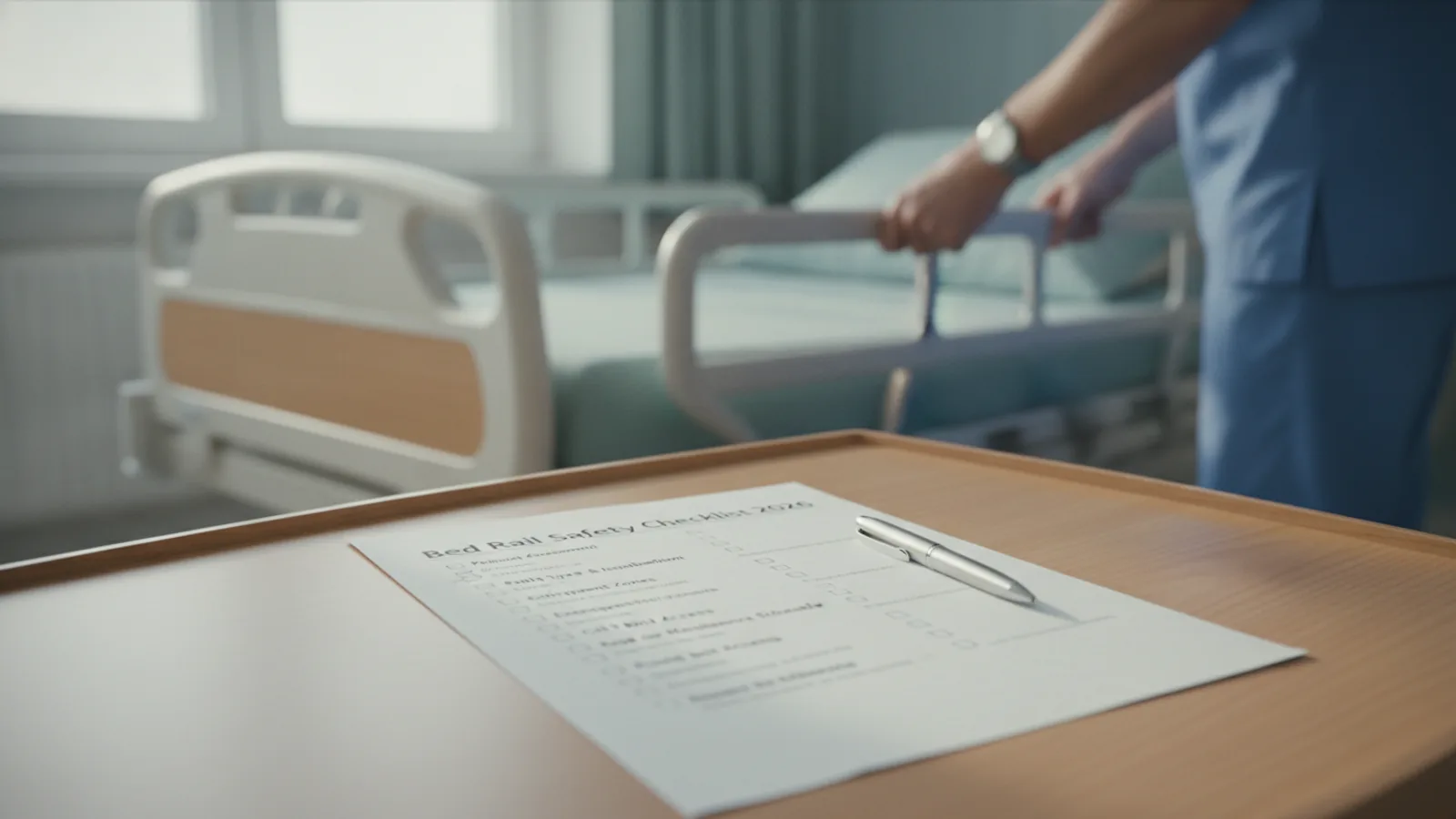
Bed Rail Safety Checklist Review 2026: Is It Worth It?
The official UK Bed Rail Safety Checklist is a non-negotiable clinical tool, not a consumer product. Its structured approach to risk assessment is essential for preventing catastrophic injuries and is considered the standard of care.
Its effectiveness is entirely dependent on diligent, consistent, and correct application by a trained or informed individual.
Quick Summary for Skimmers
This review assesses the official guidance on bed rail safety, commonly referred to as a safety checklist, issued by the UK's Medicines and Healthcare products Regulatory Agency (MHRA). This is not a product you buy, but a critical, evidence-based protocol you must follow. The checklist provides a systematic framework for assessing the user, the bed, the mattress, and the rails themselves to mitigate the severe risks of entrapment and falls. For any hospital, care home, or individual using bed rails, adopting this guidance is fundamental to safe practice and meeting the duty of care.
Pros
- Clinically validated risk framework
- Addresses all known entrapment zones
- Mandatory for CQC compliance
- Free to access from official sources
- Significantly reduces risk of severe harm
Cons
- Requires meticulous and consistent use
- Language can be clinical for lay users
- Effectiveness depends on user training
- Not a "fit and forget" solution
Bed Rail Safety Checklist Review: Short Introduction
Bed rails, also known as bed side rails or cot sides, are common pieces of equipment used to prevent vulnerable individuals from falling out of bed. While often beneficial, they carry significant, well-documented risks if not selected, fitted, and maintained correctly. The most severe hazard is entrapment, where a person's head, neck, or chest can become trapped in gaps within or around the rail, potentially leading to asphyxiation and death. To combat this, UK regulatory bodies, primarily the MHRA, have published comprehensive guidance that forms the basis of the "Bed Rail Safety Checklist".
This review does not assess a single commercial product but instead evaluates the quality, thoroughness, and practical utility of this official safety protocol. We analyse the framework as a tool for risk mitigation, asking whether it is comprehensive, usable, and effective in its goal of protecting patients and residents. For care providers, occupational therapists, and family members responsible for someone's safety, understanding and implementing this "checklist" is not optional—it is a cornerstone of safe and responsible care in 2026.
User Assessment and Compatibility
A critical function of any safety protocol is ensuring the equipment is appropriate for the specific individual. The Bed Rail Safety Checklist places immense emphasis on a detailed and person-centred assessment before bed rails are even considered. It is not a one-size-fits-all solution. The guidance mandates that the user's physical dimensions, weight, cognitive status, and likely behaviour must be carefully evaluated.
The checklist framework requires the assessor to consider if the person is prone to agitation, confusion, or involuntary movements which might lead them to try and climb over the rails, a behaviour that can increase fall risk from a greater height. It also requires a compatibility check between the user, the specific bed frame, the mattress (including its potential for compression at the edges), and the chosen bed rail. This holistic approach prevents the common error of simply attaching a random bed rail to a bed without considering the dynamic system as a whole. The guidance is clear that if a safe combination cannot be achieved, an alternative solution must be found. This rigorous focus on individualised assessment is a key strength of the protocol.
Category Score: 94/100
Risk Assessment Framework and Thoroughness
The core of the Bed Rail Safety Checklist is its systematic approach to identifying and eliminating specific, known hazards. The MHRA guidance is built upon years of incident reports and expert analysis, resulting in a remarkably thorough framework. It explicitly details the critical areas to inspect, most notably the high-risk entrapment zones. These include gaps between the bars of the rail, between the rail and the mattress, and between the rail and the headboard or footboard.
The checklist provides dimensional guidance, often citing the need to ensure gaps are no larger than a specific measurement (e.g., 60mm for gaps within the rail) to prevent head or neck entrapment. It addresses the crucial issue of mattress compression; a mattress that is too soft or narrow can create dangerous new gaps when the user's weight is applied near the edge. The protocol's thoroughness extends to the structural integrity of the rails, their locking mechanisms, and the stability of their attachment to the bed frame. By breaking down the assessment into these discrete, measurable checks, it transforms a complex safety challenge into a manageable process, leaving little room for oversight if followed correctly.
Category Score: 95/100
Clarity, Language, and Ease of Implementation
For a safety document to be effective, it must be understood by those who use it. The MHRA's guidance is written with a clinical and technical audience in mind, such as healthcare professionals and equipment providers. The language is precise and unambiguous, which is a strength in a professional context. However, for a family caregiver or a domiciliary care worker without a clinical background, some of the terminology and technical specifications may require additional explanation.
Despite this, the structure is logical. It typically follows a question-and-answer or tick-box format, guiding the user through the assessment step-by-step. Many organisations create their own branded checklist documents based on this official guidance, often simplifying the language and adding diagrams to improve usability for a broader audience. While the source material is dense, its logical flow allows for effective translation into practical, on-the-ground tools. The lack of a single, universally adopted "layperson's version" from the MHRA is a minor drawback, but the clarity of the core principles is strong.
Category Score: 88/100
Ongoing Monitoring and Maintenance Requirements
A significant strength of the bed rail safety protocol is its emphasis that risk assessment is not a one-time event. The checklist framework implicitly and explicitly requires regular reassessment. A person's clinical condition can change, mattresses can be replaced, and equipment can wear over time, all of which can introduce new risks into a previously safe setup.
The guidance compels users to establish a schedule for re-evaluation, particularly after any change in the user's condition or the equipment configuration. It covers the importance of checking for loose fittings, damage to the rails, and changes in mattress firmness or size. This proactive approach to maintenance and monitoring is crucial for long-term safety. It helps foster a culture where safety is viewed as an ongoing process rather than a static installation. The checklist acts as a record and a reminder to perform these vital periodic checks, ensuring the system remains safe throughout its use.
Category Score: 92/100
Accessibility and Documentation
The foundational documents that constitute the Bed Rail Safety Checklist are published by the MHRA and Health and Safety Executive (HSE) and are publicly available on the GOV.UK website. This makes them highly accessible to anyone with an internet connection, without any cost barrier. They are typically provided as downloadable PDF documents, which are easy to save, print, and share within care teams.
The main challenge to accessibility is not availability, but awareness. Care providers and family members may not know that this specific, detailed guidance exists or where to find it. While a simple web search for "UK bed rail safety" will usually lead to the correct resources, proactive dissemination of this information is key. The documents themselves are well-structured, though they can be lengthy. Their availability in a standard digital format is a major advantage for organisations looking to integrate the guidance into their own training and safety management systems.
Category Score: 90/100
Value for Money
Assessing the "value for money" of a free, publicly available safety protocol is a unique exercise. The monetary cost of accessing the official guidance is zero. The "cost" is the time and diligence required for training, implementation, and ongoing adherence. When weighed against the potential consequences of non-compliance—serious injury, death, and the subsequent legal and regulatory repercussions—the value is immeasurable.
The checklist provides a robust, evidence-based defence against preventable harm. For a care organisation, its implementation is a direct investment in patient safety, staff competence, and regulatory compliance. For a family, it provides a structured way to ensure a loved one is protected. The return on the investment of time is, quite simply, the prevention of tragedy. In this context, the Bed Rail Safety Checklist offers infinite value.
Category Score: 100/100
Who Is Bed Rail Safety Checklist For?
The protocol is essential for a wide range of individuals and organisations involved in the care of vulnerable adults. The following table outlines its relevance to different user groups.
| User Group | Primary Requirement | Fit | Reasoning |
|---|---|---|---|
| Hospital Trusts & Clinical Staff | Patient safety & regulatory compliance | Essential | Forms a core part of clinical risk management and is expected by regulators like the CQC. |
| Care Home Managers & Staff | Resident safety & CQC compliance | Essential | Demonstrates a safe and well-led service by mitigating a known and severe environmental risk. |
| Occupational Therapists | Safe equipment prescription | Essential | A fundamental part of the assessment process when recommending bed rails as part of a care plan. |
| Domiciliary Care Providers | Client safety in their own home | Essential | Ensures that equipment used in a client's home meets safety standards, protecting both the client and the provider. |
| Family Caregivers | Protecting a loved one from harm | Highly Recommended | Provides a professional, structured framework to ensure the safety of bed rails being used at home. |
How We Reviewed Bed Rail Safety Checklist
This review is an expert analysis of a safety protocol, not a physical product. There was no hands-on testing. Our evaluation is based on a detailed study of the official guidance documents published by the UK's Medicines and Healthcare products Regulatory Agency (MHRA) and the Health and Safety Executive (HSE).
The assessment was conducted by our editorial team, which has expertise in clinical risk management, patient safety, and healthcare equipment standards. We analysed the framework's comprehensiveness by cross-referencing it with published patient safety alerts, academic research on entrapment risks, and coroners' reports. Our scoring reflects how effectively the official guidance addresses the known hazards and its usability for its intended audiences in professional and home care settings.
Final Verdict on bed rail safety checklist
The UK's official Bed Rail Safety Checklist, as encapsulated in MHRA and HSE guidance, is an indispensable tool for preventing serious injury and death. Its structured, evidence-based approach provides a clear and reliable method for managing the significant risks associated with bed rail use. While its clinical language may present a small hurdle for lay users, its principles are logical and its thoroughness is undeniable.
This is not a product to consider buying; it is a standard of care to be adopted without question. For any organisation or individual with a duty of care for someone using bed rails, ignoring this guidance is not a viable option. Its implementation is a fundamental measure of safe practice. We conclude that the checklist is not just "worth it"—it is an essential, non-negotiable component of modern patient safety.
Access the Official UK Guidance