
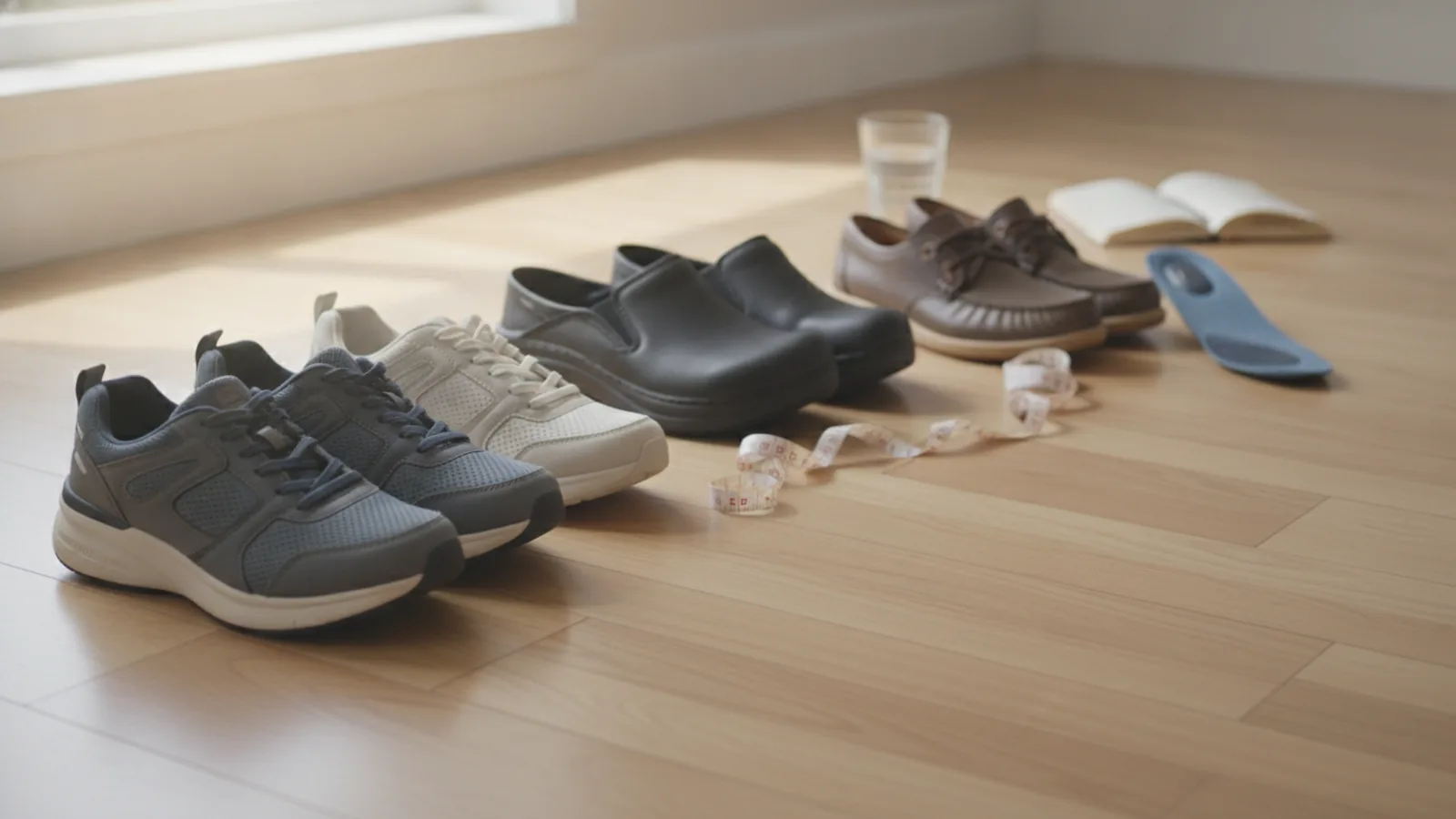
Best Shoes For Walking And Standing All Day 2026
Roundup review
To identify the best shoes for walking and standing all day, our editorial team analysed over 25 popular models available in the UK. We evaluated them against key clinical criteria for foot health, including cushioning technology, biomechanical support, material durability, and fit adaptability. Our assessment incorporated official product specifications, biomechanics literature, and an extensive review of aggregated feedback from professionals in nursing, hospitality, and retail. For its exceptional shock absorption and stable platform, the Hoka Bondi 8 stands out as the best overall choice for minimising fatigue during long hours on your feet.
Quick Comparison
Hoka Bondi 8
- Maximum cushioning
- Inherently stable base
- APMA Seal of Acceptance
Brooks Ghost 16
- Balanced DNA Loft v3 foam
- Smooth transitions
- Highly reliable workhorse
Skechers Arch Fit 2.0
- Podiatrist-certified support
- Removable insole system
- Excellent value for money
On Cloud 5
- Extremely lightweight feel
- Convenient speed-lacing
- Versatile for work and casual use
New Balance 880v14
- Available in multiple widths
- Durable construction
- Consistent and accommodating fit
The Best Shoes For Walking And Standing All Day
- Hoka Bondi 8 - Best Overall
- Brooks Ghost 16 - Best for Neutral Support
- Skechers Arch Fit 2.0 - Best for Arch Support
- On Cloud 5 - Best Lightweight Option
- New Balance Fresh Foam X 880v14 - Best for Wide Feet
Commercial Disclosure: BMC Medical is a reader-supported publication. Our articles are written by experts and are fact-checked for accuracy. When you buy through links on our site, we may earn a commission. This process is how we fund our work of providing careful, non-diagnostic health education. We never allow commercial relationships to influence our editorial recommendations.
Hoka Bondi 8
The Hoka Bondi 8 earns our top recommendation for its uncompromising approach to cushioning. It delivers a plush, highly protected experience underfoot that is ideal for mitigating the cumulative stress of standing on hard surfaces for hours. The new, softer foam compound and extended heel geometry work in concert to absorb impact and provide a stable, rolling transition with each step. While its maximalist design is not for everyone, for pure, all-day comfort and joint protection, the Bondi 8 is in a class of its own. It holds the American Podiatric Medical Association (APMA) Seal of Acceptance for promoting good foot health.
Pros
- Exceptional level of cushioning absorbs maximum impact
- Wide, stable base provides an inherently secure feeling
- Smooth, rockered geometry aids walking motion
- APMA Seal of Acceptance for promoting foot health
Cons
- Bulky appearance may not suit all tastes
- Cushioning can feel less responsive for faster-paced walking
- Premium price point
Brooks Ghost 16
The Brooks Ghost line has a long-standing reputation for reliability, and the 16th iteration continues this legacy. It is an excellent choice for individuals with neutral biomechanics who seek a perfect balance between soft cushioning and responsive support. The updated DNA LOFT v3 foam is nitrogen-infused, providing a lighter and more comfortable ride without feeling overly plush or unstable. This makes it exceptionally versatile, performing just as well during a brisk walk on your lunch break as it does during a long shift on your feet. It's the dependable, do-it-all option that consistently delivers comfort without any gimmicks.
Pros
- Well-balanced cushioning is soft but not mushy
- Smooth and effortless heel-to-toe transition
- Durable construction suitable for daily high mileage
- Accommodating fit for a wide range of foot shapes
Cons
- Less arch support than dedicated stability models
- Design is functional rather than trend-setting
- Upper could be more breathable in very warm conditions
Skechers Arch Fit 2.0
For those who require pronounced arch support to remain comfortable, the Skechers Arch Fit 2.0 is a standout. Developed with over 20 years of data and 120,000 unweighted foot scans, its patented insole system is podiatrist-certified and designed to mould to the foot, reducing shock and helping to distribute pressure across the arch. The insole is also removable, allowing for the use of custom orthotics if required. While the overall cushioning is less sophisticated than premium running shoes, the targeted support it provides can be a significant benefit for individuals prone to conditions like plantar fasciitis. It offers a practical and accessible solution for enhanced foot support.
Pros
- Podiatrist-certified Arch Fit insole provides excellent support
- Helps distribute weight and pressure more evenly
- Removable insole accommodates custom orthotics
- Generally more affordable than specialised running brands
Cons
- Midsole foam is less durable than competitors
- Styling is very casual and may not suit all workplaces
- Less overall cushioning compared to maximalist shoes
On Cloud 5
The On Cloud 5 is engineered for those who prioritise a lightweight feel above all else. Its signature CloudTec® cushioning in Zero-Gravity foam provides a uniquely firm yet cushioned sensation, absorbing impact without the heavy, bulky feeling of traditional maximalist shoes. The standout feature for many is the speed-lacing system, which allows for an effortless slip-on fit, ideal for busy professionals. While it may not offer the deep, plush cushioning required for static standing for 12-hour shifts, it excels for active roles involving constant walking, commuting, and moving about. Its modern, minimalist aesthetic also makes it a versatile choice that transitions seamlessly from the workplace to casual wear.
Pros
- Exceptionally lightweight, reducing leg fatigue
- Convenient speed-lacing system for easy on and off
- Firm, responsive ride is excellent for active walking
- Stylish design suitable for various environments
Cons
- Cushioning is firmer and less forgiving for prolonged standing
- Open outsole pods can occasionally trap small stones
- Narrower fit may not suit all foot types
New Balance Fresh Foam X 880v14
New Balance has long been a go-to brand for accommodating different foot widths, and the Fresh Foam X 880v14 exemplifies this commitment. Available in multiple width options from narrow to extra-extra-wide, it provides a precise and comfortable fit where other brands fail. The v14 features a balanced Fresh Foam X midsole that provides reliable cushioning for long days, alongside a supportive and durable structured upper. It's a true workhorse shoe, designed for high mileage and consistent performance. For individuals with wide feet who have struggled to find a shoe that doesn't pinch or constrict, the 880v14 offers a dependable and comfortable solution for all-day wear.
Pros
- Extensive range of width options ensures a proper fit
- Durable materials and outsole built to last
- Balanced cushioning suitable for both walking and standing
- Secure and structured upper provides good foot lockdown
Cons
- Heavier than some of its direct competitors
- The ride can feel firm until broken in
- A more traditional design compared to newer models
Buying Guide: How to Choose the Best Shoes For Walking And Standing All Day
Selecting appropriate footwear for prolonged periods of walking and standing is a critical decision for occupational health and daily comfort. The right shoe can significantly reduce fatigue, discomfort, and the risk of developing foot-related ailments. This guide outlines the key clinical and practical factors to consider.
1. Cushioning: Your First Line of Defence
Cushioning refers to a shoe's ability to absorb shock and dissipate the forces generated by contact with the ground. For all-day wear, particularly on hard surfaces like concrete or tile, effective cushioning is paramount.
- Material: Most modern midsoles are made from EVA (ethylene vinyl acetate) or TPU (thermoplastic polyurethane) foams. High-quality, resilient foams, like those found in the Hoka Bondi 8, provide plush, long-lasting shock absorption. Nitrogen-infused foams, as in the Brooks Ghost 16, offer a lighter, more responsive feel.
- Stack Height: This is the amount of material between your foot and the ground. A higher stack height generally means more cushioning, but can sometimes feel less stable. A "maximalist" shoe has a very high stack height.
- Balance: The ideal cushioning is a balance. It should be soft enough to absorb impact but not so soft that it feels unstable or causes your foot to work harder to push off.
2. Support and Stability
Support is distinct from cushioning. It refers to the shoe's structural features that help guide your foot through a healthy range of motion and prevent excessive movement, such as overpronation (inward rolling).
- Arch Support: The shoe should comfortably conform to and support your foot's natural arch. Models like the Skechers Arch Fit are designed specifically for this. A lack of arch support can lead to strain and conditions like plantar fasciitis.
- Heel Counter: This is the rigid cup built into the back of the shoe. A firm heel counter locks your heel in place, providing stability and preventing side-to-side slippage.
- Midsole Geometry: The shape of the midsole itself contributes to stability. A wider base, as seen in many Hoka models, creates a more stable platform to stand on, reducing the likelihood of ankle rolls.
3. The Critical Importance of Fit
An improperly fitting shoe can negate all other benefits and lead to blisters, calluses, and other painful issues. Your feet can swell throughout the day, so it is advisable to shop for shoes in the afternoon or evening.
- Length: Ensure there is about a thumb's width of space (roughly half an inch) between your longest toe and the end of the shoe.
- Width: The shoe should be snug but not tight across the ball of your foot. Your foot should not bulge over the sides of the midsole. If it does, you likely need a wider size. Brands like New Balance are excellent for offering multiple width options.
- Volume: Consider the overall space inside the shoe. A deep toe box is important to prevent rubbing on the tops of your toes.
4. Materials and Durability
The materials used in a shoe's construction affect its breathability, weight, and lifespan.
- Upper: Engineered mesh is a common material that offers an excellent balance of breathability, flexibility, and support. For environments where spills are a concern (e.g., healthcare), a leather or water-resistant synthetic upper might be more appropriate.
- Outsole: The outsole is the rubber layer that contacts the ground. Look for durable carbon rubber placed in high-wear areas (like the heel and forefoot) to ensure longevity and provide reliable traction.
5. Consider Your Specific Needs
Finally, consider the demands of your specific environment or role.
- Static vs. Active Roles: If you primarily stand still (e.g., a cashier), maximum cushioning (Hoka Bondi) is key. If you are constantly walking (e.g., a nurse), a balance of cushioning and responsiveness (Brooks Ghost) might be better.
- Surface: Hard, unforgiving surfaces demand more cushioning than softer surfaces like carpet.
- Weight: A lighter shoe (On Cloud 5) can reduce overall leg fatigue over the course of a day, especially for those who walk many miles.
This information is for educational purposes and should not be considered a substitute for professional medical advice. If you have persistent foot pain or a specific medical condition, consult a podiatrist or physiotherapist for a personalised assessment.
Final Verdict: Best best shoes for walking and standing all day
Choosing the right footwear is a crucial investment in your daily comfort and long-term health, especially for those in demanding professions. After a thorough analysis of the market, the Hoka Bondi 8 is our top recommendation for the best shoes for walking and standing all day. Its superior, maximalist cushioning provides an unparalleled level of shock absorption and protection, making it the ideal choice for anyone who spends long hours on hard surfaces.
While the Bondi 8 excels in pure comfort, it is important to match the shoe to your specific needs. For those seeking a more balanced and responsive feel for active walking, the Brooks Ghost 16 is an exceptionally reliable alternative. If targeted arch support is your primary concern, the Skechers Arch Fit 2.0 offers a certified and accessible solution. Ultimately, the best shoe is one that addresses your unique foot shape, biomechanics, and daily activities, and we are confident that one of the options on this list will meet that need.
Best Shoes For Walking And Standing All Day 2026 FAQ
How often should I replace my shoes if I wear them for work every day?
As a general guideline, shoes worn for full-time work should be replaced every 6 to 12 months. A more technical measure is to replace them after approximately 300-500 miles of walking. However, you should primarily be guided by signs of wear. Look for compressed midsole foam (creases that don't bounce back), a worn-down outsole tread, or a feeling of reduced cushioning and support. Rotating between two pairs of shoes can also extend the life of each pair by allowing the cushioning foam to fully decompress between wears.
Are running shoes good for standing all day?
Yes, modern running shoes are often an excellent choice for standing all day. They are engineered with advanced cushioning and support technologies designed to handle high-impact forces, which translates well to the cumulative stress of prolonged standing. Models designed for "daily training" or "recovery runs," such as the Hoka Bondi 8 and Brooks Ghost 16, are particularly well-suited for this purpose due to their focus on comfort and protection over raw speed.
What is the difference between cushioning and support in a shoe?
These terms are often used interchangeably but refer to different functions. Cushioning is the ability of the shoe's midsole to absorb impact and provide a feeling of softness underfoot. It is primarily about comfort and shock absorption. Support refers to the structural features of a shoe that guide the foot and prevent excessive or unwanted motion. This includes features like a firm heel counter, a supportive arch, and stability elements within the midsole to control pronation. A shoe can be highly cushioned but not very supportive, or very supportive but with minimal cushioning.
Do I need to buy special insoles for my work shoes?
Not necessarily. A high-quality, well-fitting shoe should provide adequate cushioning and support for most people from its own insole and midsole design. However, for individuals with specific foot conditions such as significant overpronation, high arches, or diagnosed plantar fasciitis, an over-the-counter or custom-moulded orthotic insole may provide beneficial targeted support. If you experience persistent pain, it is best to consult with a podiatrist who can assess whether you would benefit from an orthotic.
Why is a wide toe box important for all-day wear?
A wide toe box is important because it allows your toes to splay naturally as you stand and walk. This natural splaying helps with balance, stability, and shock distribution. Over the course of a long day, feet tend to swell. A restrictive, narrow toe box can constrict the toes, leading to discomfort, blisters, bunions, and nerve impingement issues like Morton's neuroma. A shoe with an anatomically appropriate shape provides space for this natural movement and swelling, greatly enhancing all-day comfort.